
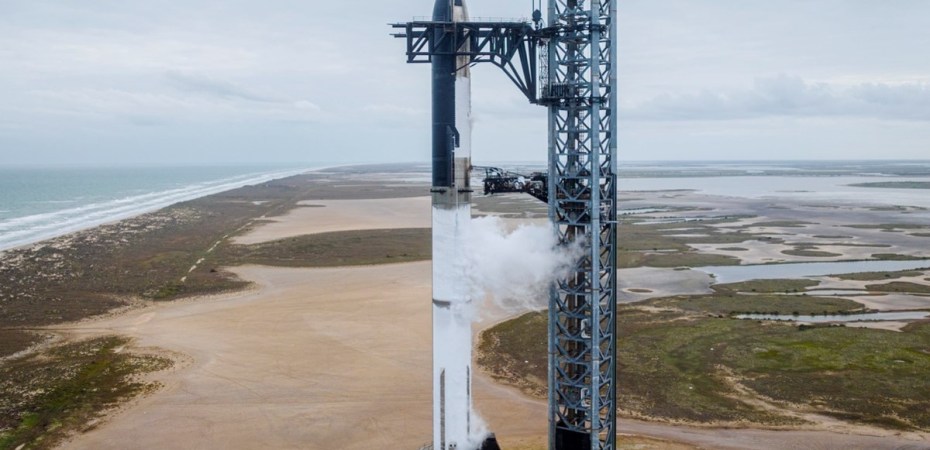
SpaceX Starship orbital flight could take place on 4/20 if it receives FAA license approval. The epic mission that starts from Starbase in South Texas will be the moment that makes history for the space industry yet again.
SpaceX’s huge new spacecraft could set off on its first-ever orbital test flight just next month. The company is currently tentatively eyeing mid-to-late April for this epic mission, which kicks off from Starbase in South Texas. Although the first orbital flight of the rocket that is supposed to take people to Mars has been repeatedly postponed, it seems that now the company is ready.
SpaceX CEO Elon Musk is targeting the end of April for this momentous launch. While he did not explicitly state the date, as this is not possible due to several factors, he has hinted that he prefers April 20 to launch the historic mission. On March 16, Musk announced that SpaceX would be ready to launch Starship in a few weeks, but launch timing depends on FAA license approval. He also indicated that it would be closer to the third week of April, which falls on the 20th.
“SpaceX will be ready to launch Starship in a few weeks, then launch timing depends on FAA license approval.
Assuming that takes a few weeks, first third launch attempt will be near end of week of April, aka…”
The Starship orbital flight will be a test mission. A fully loaded Starship rocket will fly 100 miles in the sky for the first time. If successful, Starship will be the largest rocket developed by a private company to ever reach Earth orbit. This will also prove its viability for many space missions. However, even if the mission is not 100% successful, SpaceX will receive incredibly important data in order to achieve a positive result in subsequent tests.
The chance of Starship reaching orbital altitude on the first try is only about 50 percent, according to Musk at the Morgan Stanley conference in San Francisco on March 7.
The Starship consists of a huge first-stage booster called the Super Heavy and a 165-foot upper-stage spacecraft called the Starship. Both parts are designed to be fully and quickly reused. They are both powered by SpaceX’s next-generation Raptor engine: 33 of them for Super Heavy and six for Starship.
 Verum News