
Image: Tesla
Follow Verum News on Х
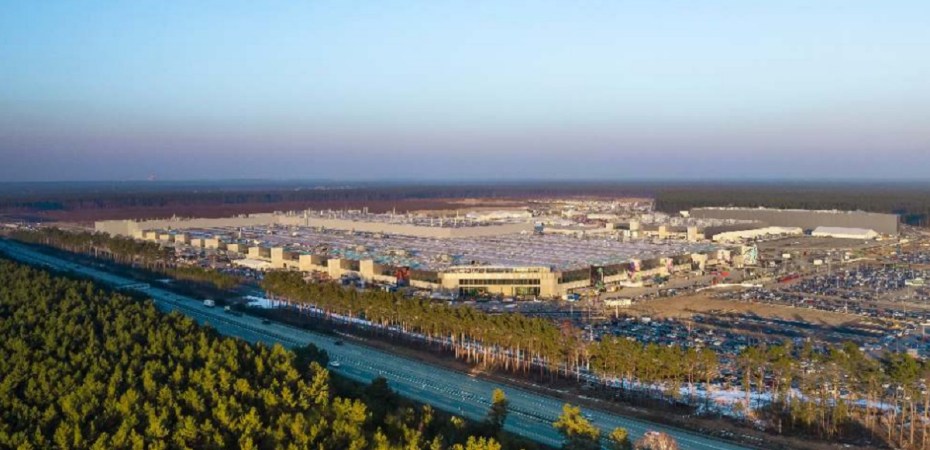
The Brandenburg Ministry of Health has published details of accidents that occurred at Tesla Giga Berlin. The analysis shows that in most cases, they were due to violations of safety regulations by the employees themselves.
Tesla’s Brandenburg factory is one of the most monitored plants in the state. During the construction period until May 2021, Tesla was visited by representatives of the labor safety authority LAVG at least once a week. Since May 2021, inspections have been carried out at least once every two weeks. For example, comparable large companies are inspected by occupational safety and health authorities, on average, every 10-30 weeks. At LAVG, three people are responsible for monitoring Tesla, two of whom are primarily dedicated to the company.
During Tesla’s entire operation, starting from the construction phase, only seven serious accidents occurred. It is worth noting that most of them were on a construction site, and not in production. In addition, most of them were caused by employees who violated safety regulations.
For example, at a construction site, an employee of a contracting company had his foot between an excavator bucket and an excavator’s retractable blade when he wanted to fix a fault in the blade. The excavator operator accidentally bumped into the control lever. The employee suffered an open fracture to his leg. Elsewhere, a construction company employee injured his finger with a circular saw. Tesla employees acted in violation of work instructions.
During the year, almost 250 ambulance calls were made to Giga Berlin. However, Health Minister Ursula Nonnemacher noted that this number is not large. For example, a settlement with about 11,000 people also receives the same number of ambulance calls. It is worth noting that the number of Tesla employees in production alone is about 11,000.
In addition, details of 26 environmental accidents were also revealed. For example, there was a case of fire in a container with slag, a leak of 50 liters of diesel fuel, a leak of 15 liters of formic acid, and others. None of the 26 incidents could be classified as a major incident within the meaning of the Major Incidents Ordinance, it said. Moreover, not every accident is “environmentally significant.” Harmful substances did not always end up in the environment.
Article edited by @SmokeyShorts; follow him on X
© 2023, Eva Fox | Verum News. All rights reserved.
 Verum News