
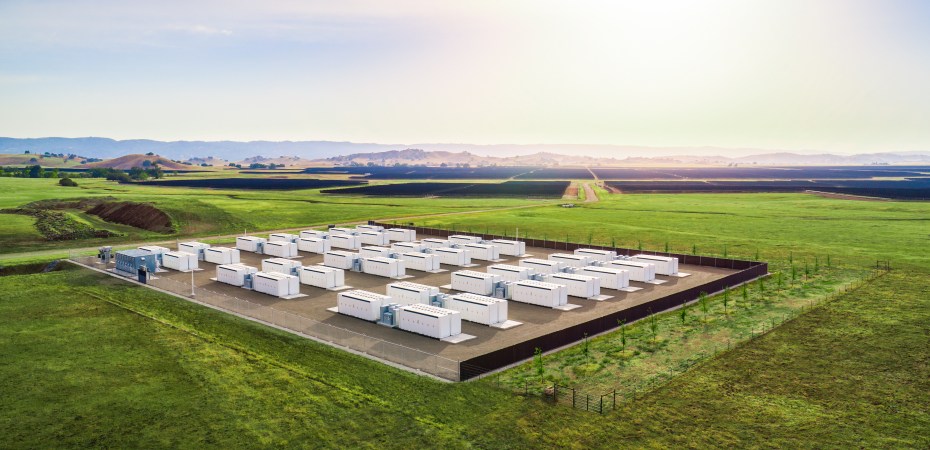
Contact Energy has contracted with Tesla to provide Megapack units for the development of a 100 MW grid-scale battery in Auckland, New Zealand. Megapack 2 XL will be used for the renewable energy project.
Contact Energy (Contact) has responded to calls for more energy storage by awarding a contract to Tesla to build a 100-megawatt (MW) battery. It will provide enough electricity to cover peak winter demand for 44,000 homes for more than two hours.
The new grid battery costs $163 million. It will build on Contact’s existing partnership with New Zealand Steel and will be located at its Glenbrook site in south Auckland. It will be the country’s newest large battery pack, the closest to its largest city, and the first Tesla Megapack 2 XL system in New Zealand. As part of the agreement with the US company, Contact also has the option to increase battery capacity to 130 MW at this site. If the expansion goes ahead, it will make it New Zealand’s largest battery.
The battery will store excess renewable electricity generated by wind or solar during off-peak periods. It will dump this electricity into the grid when it is needed. In addition, the battery will provide backup power in case of unexpected outages.
Contact CEO, Mike Fuge, says the battery project will play a key role in maintaining New Zealand’s reliable electricity supply, particularly during periods of high demand. It will also ultimately help the company transition from an increasingly constrained gas market.
“It’s a bit like the Swiss Army Knife of the electricity system, performing a range of roles that will ultimately keep the lights on and reduce carbon emissions. The battery will supply power to the grid in an instant, quickly getting electricity to where it is most needed in the country. It will also support the development of new renewables like wind and solar generation,” said Fuge, according to a company press release.
“Contact has made a commitment for its generation to be net zero by 2035, and further reduce New Zealand’s remaining reliance on fossil fuel electricity generation.”
Contact will begin operations at the Glenbrook site immediately. Battery installation is expected to take up to 18 months, with commercial operation expected to begin by March 2026. About 50 jobs will be created during construction. Contact will manage the entire project, and Tesla will be responsible for supplying and commissioning the battery. The American company will also provide long-term maintenance services.
In May 2023, Contact and New Zealand Steel announced an innovative renewable energy agreement. It allows the steel making company to cut its carbon dioxide emissions by almost half. Through a flexible off-peak agreement, Contact will provide 30 MW of electricity to New Zealand Steel for its new arc furnace. A project using Tesla Megapack units will make this possible.
“We’re very pleased to be able to build on our existing partnership with Contact Energy through the installation of its new grid-scale battery at our Glenbrook site,” said New Zealand Steel Chief Executive, Robin Davies.
Article edited by @SmokeyShorts; follow him on X
© 2024, Eva Fox | Verum News. All rights reserved.
 Verum News